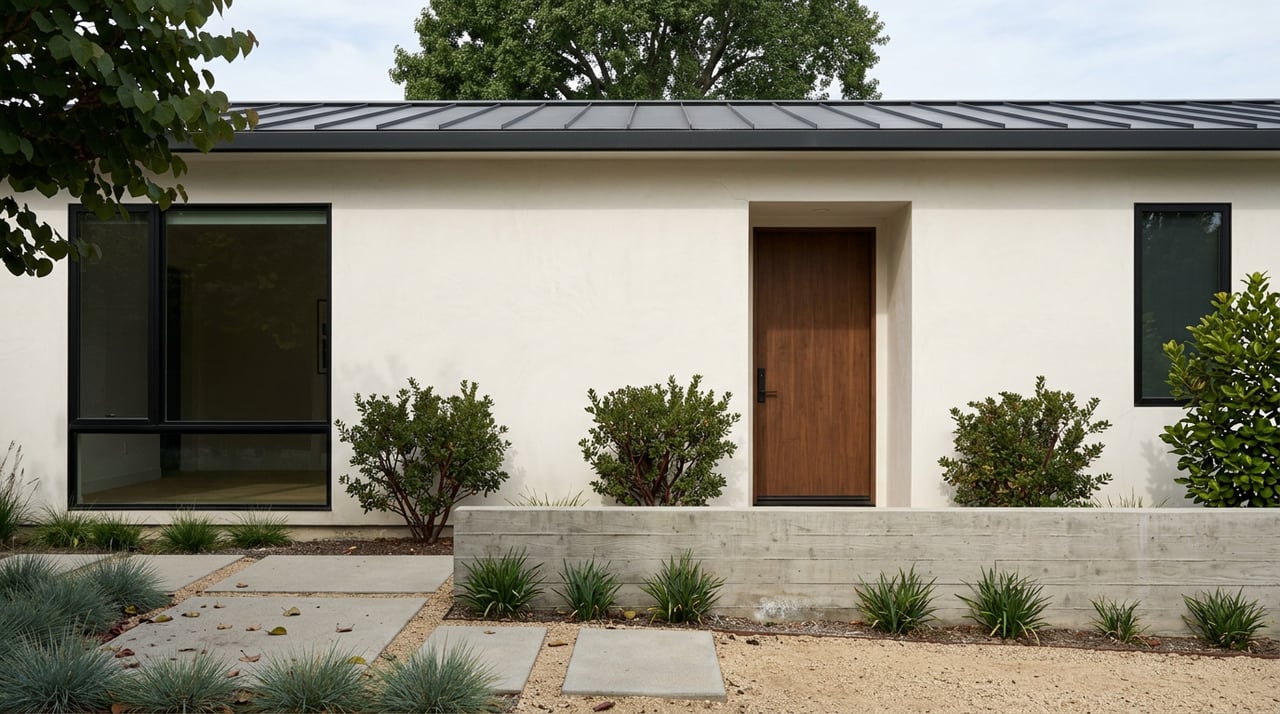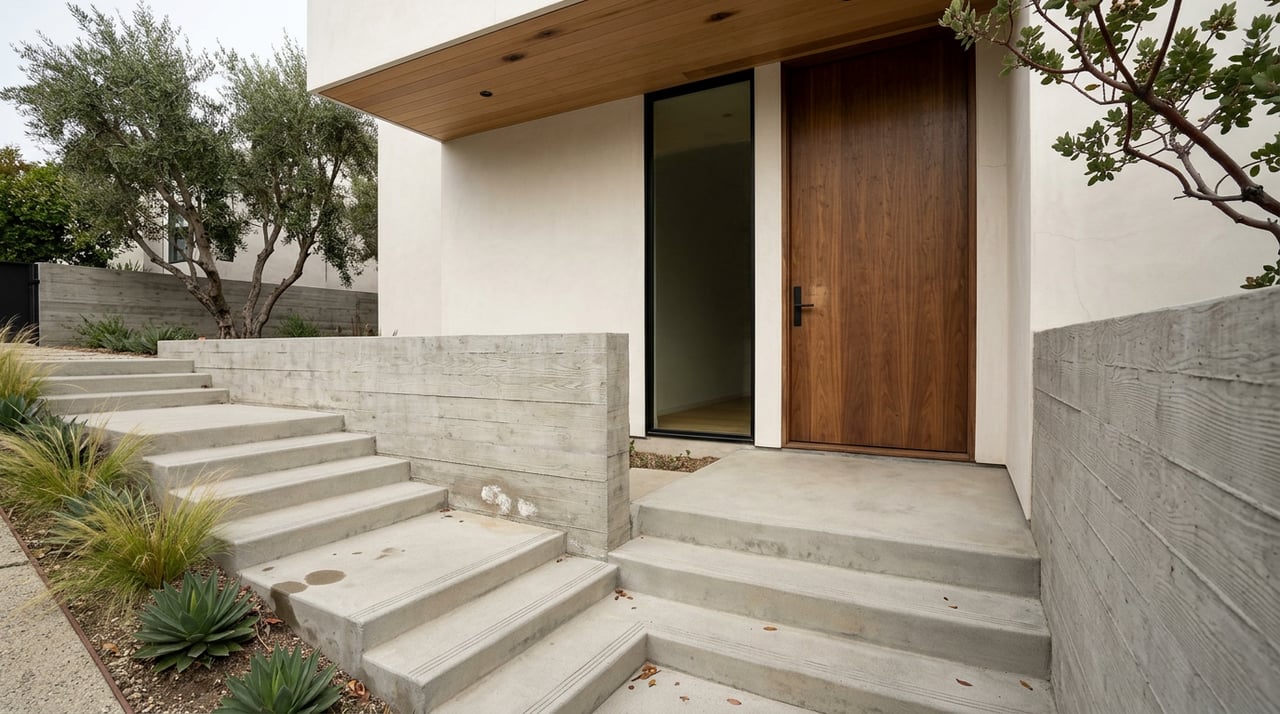
Open five Silver Lake market reports and you will see five different medians. Redfin recently pegged the neighborhood at $1,675,000. Movoto's July 2026 snapshot landed at $1.59M. Homes.com placed the July median sale price at $1,595,000. Zillow's average home value sits closer to $1,463,439, essentially flat year over year. Grey Square cited a Movoto month at $1,525,000. Each is defensible. None of them describes a house you can actually buy.
The reason is not that anyone is wrong. It is that Silver Lake is not one market. It is three, priced under one name, and the buyer who tours from a single median is shopping a composite that does not exist on the ground.
The Median Is Doing Too Much Work
Underneath the neighborhood-wide numbers, the sub-markets diverge. Homes.com and Rubyhome put July 2026 activity around $1.6M with roughly $920 per square foot and 69 active listings as of July 14. Redfin's Compete Score sat at 79, with average homes selling near 6% above list and the hottest properties around 13% above. May 2026 recorded 92 sales, up 45.7% year over year, at a median closer to $1.4M. Days on market ran 34 to 38 on the aggregate.
Read the aggregate and you get a story of a competitive, mildly cooling neighborhood. Read the sub-markets and you get three different transactions, priced by three different frictions.
| Sub-market | Typical range (2026) | Days on market | What sets price |
|---|---|---|---|
| Reservoir-adjacent | ~$200K–$400K premium to neighborhood median | 14–21 with multiple offers | Walk access, view, thin supply |
| Flat-grid (near Sunset Junction) | $1.2M–$1.55M | 18–30 when priced right | Architectural condition, ADU status |
| Hillside and stair-access | $950K–$1.5M | 45–70+ regardless of condition | Paperwork trail and slope diligence |
Ranges above reflect Silver Lake sub-market reporting compiled from May–July 2026 activity by Redfin, Homes.com, and local practitioners tracking the neighborhood. Treat them as directional, not street-level.
Reservoir-Adjacent: Scarcity, Not Finish
The Silver Lake Reservoir Complex with its roughly 2.2-mile loop, the Silver Lake Meadow, and the dog parks is the recreational spine of the neighborhood. Homes on the streets that ring it carry a real premium tied to walking access and, on the right lot, direct water views. That premium is the cleanest one to underwrite because supply is genuinely thin. Correctly priced homes in this tier go into contract in 14 to 21 days, often with multiple offers, and buyers tolerate less inspection friction than they do elsewhere in the neighborhood.
The implication for a buyer: reservoir-adjacent listings are the closest thing Silver Lake has to a price-taker market. Waiting for a discount here usually means waiting past the sale.
The Flats: ADU Status Sets the Ceiling
Down on the flatter streets around Sunset Junction, where Sunset Boulevard meets Santa Monica Boulevard, the arithmetic changes. This is walkable-errands territory: the twice-weekly Silver Lake farmers market, Intelligentsia's tiled patio, Whole Foods on Hyperion, and the boutiques and restaurants along Rowena Ave and Silver Lake Boulevard. Character stock skews to 1920s and 1930s bungalows sitting alongside remodels.
The flats trade on two things: architectural condition and ADU status. State legislation (AB 2299 and SB 1069) simplified approvals significantly, and detached garage conversions on single-family lots are the most common path in Silver Lake. A permitted ADU on a flat-grid parcel is now a repricing event, not a footnote, because it functionally converts a single-family sale into an income-producing purchase without shifting the buyer's loan product. Two comparable bungalows on the same block can trade $150K–$250K apart on ADU status alone.
Correctly priced turnkey flat-grid homes clear in 18 to 30 days. Overprice by 5 to 7 percent and the same house sits 45 to 70 days, then triggers a reduction that signals weakness. That is a mechanical outcome, not a market prediction.
The Hillside: The File Is the Product
The hillside tier is where the price band widens, days on market lengthen, and the buyer pool shrinks structurally. Homes here range from around $950K to $1.5M, and even well-presented properties routinely sit 45 to 70+ days regardless of condition. The reason is not aesthetic. It is transactional.
Silver Lake's hillside terrain places a real portion of the neighborhood inside a Very High Fire Hazard Severity Zone, the same designation used across much of hilly Los Angeles per Cal Fire's mapping. Flats properties near Sunset Junction generally sit outside that highest-risk zone. For any hillside parcel, the California Natural Hazard Disclosure Statement will note the fire zone alongside earthquake-induced landslide, liquefaction, and Alquist-Priolo fault zones where applicable. Buyers arriving from other California markets in 2026 are reading those boxes more carefully than they were three years ago, in part because insurance dynamics have shifted for hillside fire-zone segments across Southern California.
Layer on top the city's Hillside Construction Regulation overlay, which has quietly rewritten what counts as a clean file, and the LADBS permit record any buyer can pull on their own before writing an offer. When a buyer's search returns fewer permits than the house has visible features, the seller either explains it in the disclosure package or watches the offer soften.
Five documents do the pricing work on a Silver Lake hillside transaction. A seller who has all five ready before listing is selling a different product than one who is scrambling in escrow:
- A clean LADBS permit history for every addition, deck, ADU, and window change.
- Engineered plans and final sign-off for retaining walls above the permit threshold.
- A recent soils or geotechnical report, especially on parcels with visible slope movement or previous drainage work.
- The Natural Hazard Disclosure Statement with fire zone, landslide, and fault designations pulled.
- A firm homeowners insurance quote, not an estimate, in hand before the buyer removes contingencies.
A documented wall problem on a mid-range Silver Lake hillside sale commonly translates into a five-figure credit request, sometimes larger where drainage is implicated. That is not a finish-level negotiation. It is a schedule-and-permitting-risk negotiation, and it happens in the last two weeks of escrow when leverage is at its most expensive.
For a buyer, the practical read is that hillside listings reward patience and diligence over speed. A house that has sat 60 days is not necessarily overpriced. It may be waiting for a buyer willing to underwrite the paperwork gap the last three walked away from.
What This Means When You Tour
The reason all of this matters is that a Silver Lake shopping day usually collapses the three sub-markets into a single afternoon. Morning showing on a reservoir-adjacent bungalow, lunch at Casita del Campo, two flats near Sunset Junction, then two hillside listings before sunset. The houses look like variations on a theme. They are not. They are three different transactions with three different clocks, three different inspection profiles, and three different negotiating dynamics.
A pre-approval letter written to the neighborhood median will underserve you at the reservoir edge and overserve you on the hillside. An inspection budget calibrated to a flat-grid remodel will be inadequate for any parcel with grade. A schedule that assumes 30 days to close will hold on a flat-grid turnkey and slip on a hillside with an unpermitted deck.
The fix is not a bigger budget. It is deciding which of the three markets you are shopping before the first tour, and pricing your offer strategy to that sub-market's actual mechanics.
FAQ
Is the neighborhood-wide median useful at all? It is useful as a trend line year over year, not as a pricing tool for a specific house. Redfin's March 2026 median of $1.4M and Homes.com's July median of $1.595M tell you the market is active and roughly stable in aggregate. Neither tells you what to offer on a hillside two-bedroom with a legalized garage conversion.
How much of a premium do reservoir-adjacent homes actually carry? Local practitioner reporting from May 2026 put the reservoir premium at $200K to $400K over the neighborhood median, with the widest gaps on view lots and streets inside walking distance of the loop trail.
Does rent stabilization affect a single-family purchase in Silver Lake? LA's Rent Stabilization Ordinance applies to multi-unit buildings built before October 1978. Single-family homes are exempt. If you are buying a duplex or triplex, though, RSO tenant rights materially affect your sale and occupancy options, and that conversation should happen before the offer, not after.
Is a soils report standard on every Silver Lake sale? Not on flat lots. On any parcel with grade, past drainage work, or visible slope indicators, it has become a routine buyer request in 2026 and is worth preempting on the seller side.
If you are weighing an offer in Silver Lake and want a read on which of the three sub-markets a specific address actually sits in, that is the conversation AVRE Group is built for. We walk parcels before we price them, pull permit histories before we write, and match your offer terms to the transactional mechanics of the tier you are shopping.
Work With Us.